
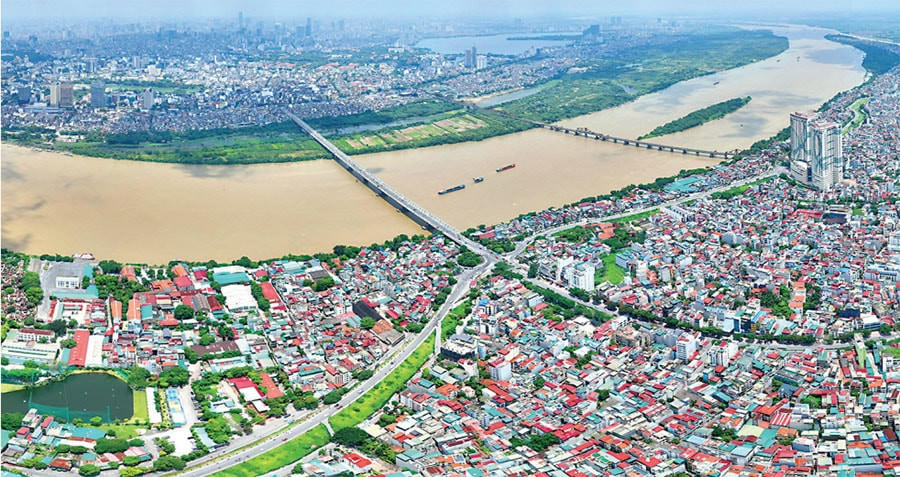
“Awakening” Land with Untapped Potential
One of the most notable changes in Hanoi in recent years has been the expansion of its development space beyond the central urban area. The Capital’s 100-year master plan establishes a polycentric, multi-hub structure, linked by development corridors and key growth axes. Accompanying this vision is the need to develop an infrastructure system capable of connecting these growth poles with one another and with the city center.
To the west, Hoa Lac is envisioned as a hub for science, technology, and innovation, while Xuan Mai is one of the city’s key urban development areas. Investing in transport infrastructure in advance will make these areas more accessible to residents, businesses, and research and manufacturing facilities.
To the north, the Dong Anh–Me Linh–Soc Son area, connected to the Noi Bai corridor, holds advantages in aviation, logistics, industry, and regional connectivity. To the south, projects linking National Highway 1A, the Phap Van–Cau Gie Expressway, ring roads, and radial routes are expanding access to Ngoc Hoi and Phu Xuyen—areas that still offer significant potential for industrial, logistics, and service-sector development. What these areas have in common is that infrastructure is not being built to follow existing development, but is instead being planned in anticipation of the development to come.
A road can ease congestion and shorten travel times. But when it is connected to ring roads, expressways, urban railways, airports, or manufacturing hubs, its value is no longer confined to the infrastructure project itself. Improved market access, lower transport costs, and reduced travel times give businesses more options when choosing investment locations, while making it easier for residents to access jobs and services. This is when an individual transport project becomes part of a broader infrastructure system designed to support growth.
One Station, Multiple New Values
While ring roads, development corridors, and river-crossing bridges expand the city’s development space horizontally, urban rail is introducing a different approach to spatial organization: developing urban areas around public transport. This is why transit-oriented development (TOD) has become an increasingly important focus for Hanoi as it expands its metro network.
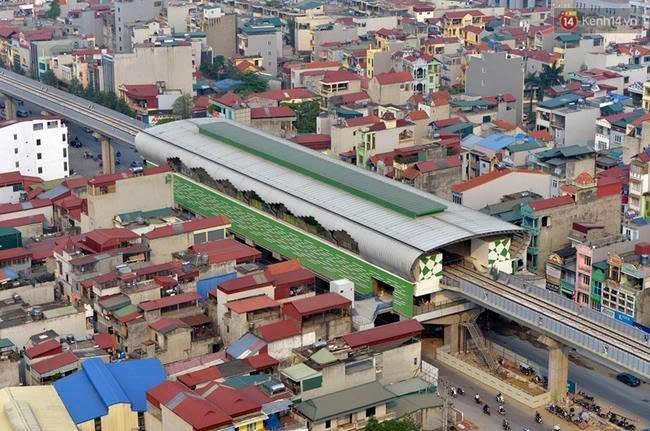
With TOD, a station is more than simply a stop for trains. Within an area that can be conveniently accessed on foot, by bus, and through other feeder services, the area surrounding the station can accommodate housing, commercial and service facilities, offices, and public spaces at appropriate densities.
In this way, investment in urban rail creates impacts that extend beyond the physical infrastructure itself. Residents gain more mobility options; businesses gain better access to workers and customers; and service providers gain access to new markets. More importantly, land use around stations can be reorganized toward greater concentration, rather than continuing the pattern of sprawling urban expansion.
According to economist Assoc. Prof. Dr. Ngo Tri Long, traffic congestion causes significant losses for Hanoi, not only in fuel consumption but also in working time, logistics costs, and overall economic productivity. Therefore, developing high-capacity public transport and integrating metro systems with buses, parking facilities, and other modes of transportation has a direct bearing on the city’s growth capacity.
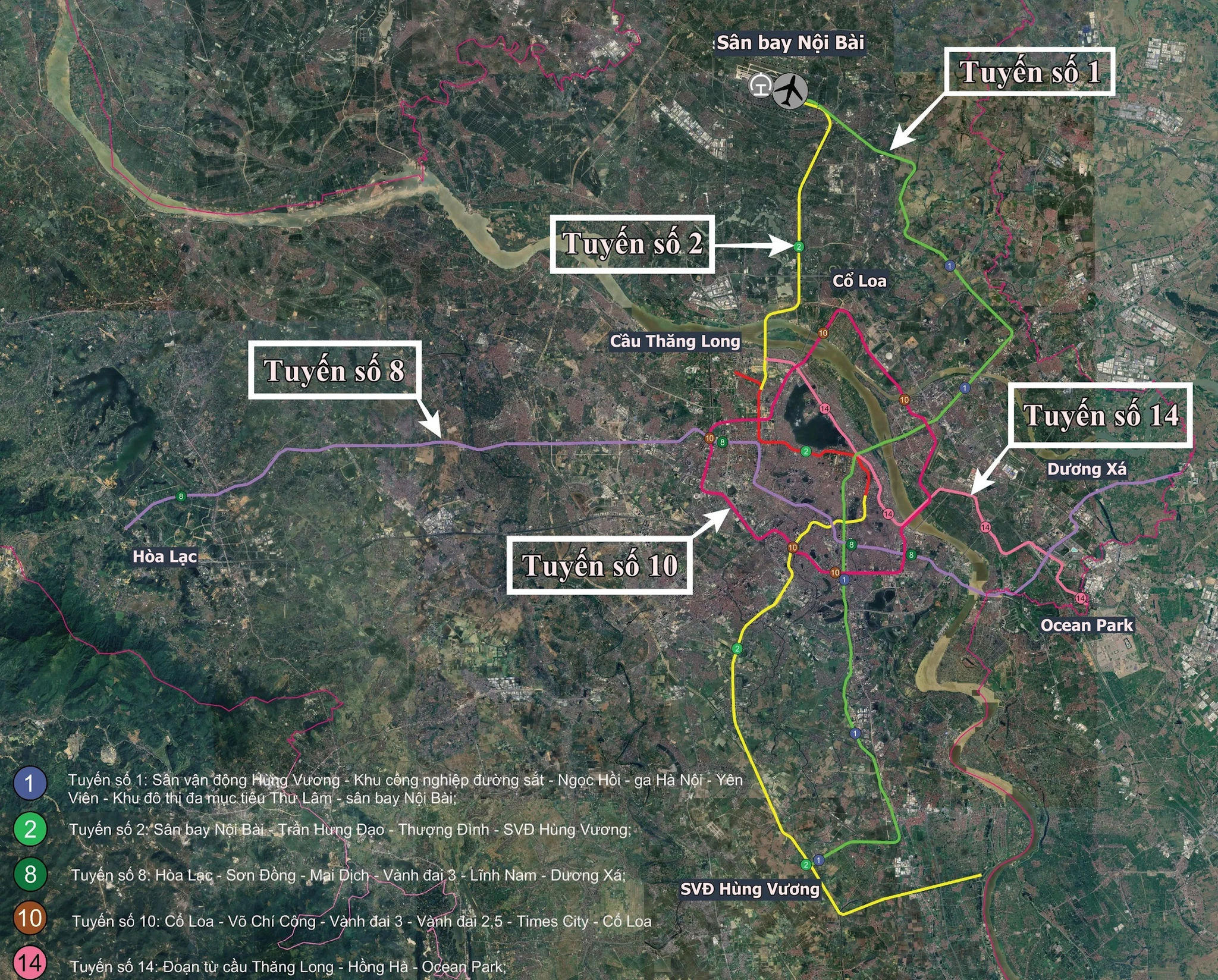
This is also why Hanoi is entering a new phase in the development of urban rail. The simultaneous launch of construction on five metro lines, with a combined length of 303.5 km, on June 22, 2026, was not simply about adding new modes of transport, but also about establishing a new structural framework for the city.
As metro lines connect the city center with Hoa Lac, Noi Bai, Thuong Tin, Gia Lam, and other emerging development areas, the distances between homes, workplaces, service centers, and economic hubs will be shortened. Areas along the routes, particularly around stations, will have greater opportunities to develop into new urban centers. The value of infrastructure, therefore, lies not merely in the number of kilometers of railway built, but in the new flows of people, capital, and economic activity that it can generate.
To turn this potential into reality, project schedules must first be ensured. For urban railway projects, investors and contractors are reorganizing resources, equipment, and technology to meet the city’s demanding timelines.
Nguyen Viet Quang, CEO of Vingroup, affirmed that the consortium implementing the projects will mobilize maximum resources, organize construction scientifically, and apply technology to manage progress, quality, and safety. At the same time, it will proactively prepare equipment, construction systems, and personnel to meet implementation requirements.
With the metro network being developed simultaneously, the progress of each individual line is also linked to the effectiveness of the system as a whole. Completing each line sooner will facilitate connections with other lines, enable the formation of TOD hubs, and enhance the capacity of the public transport network.
Adding Another Layer of Infrastructure for Growth
Hanoi’s new growth spaces are also being shaped by a less visible layer of infrastructure: digital infrastructure. As the city expands, the volume of data on population, land, transportation, construction, and economic activity is growing rapidly. Shared data platforms, digital maps, spatial databases, and intelligent transportation systems are giving the city additional tools to manage these emerging urban spaces.
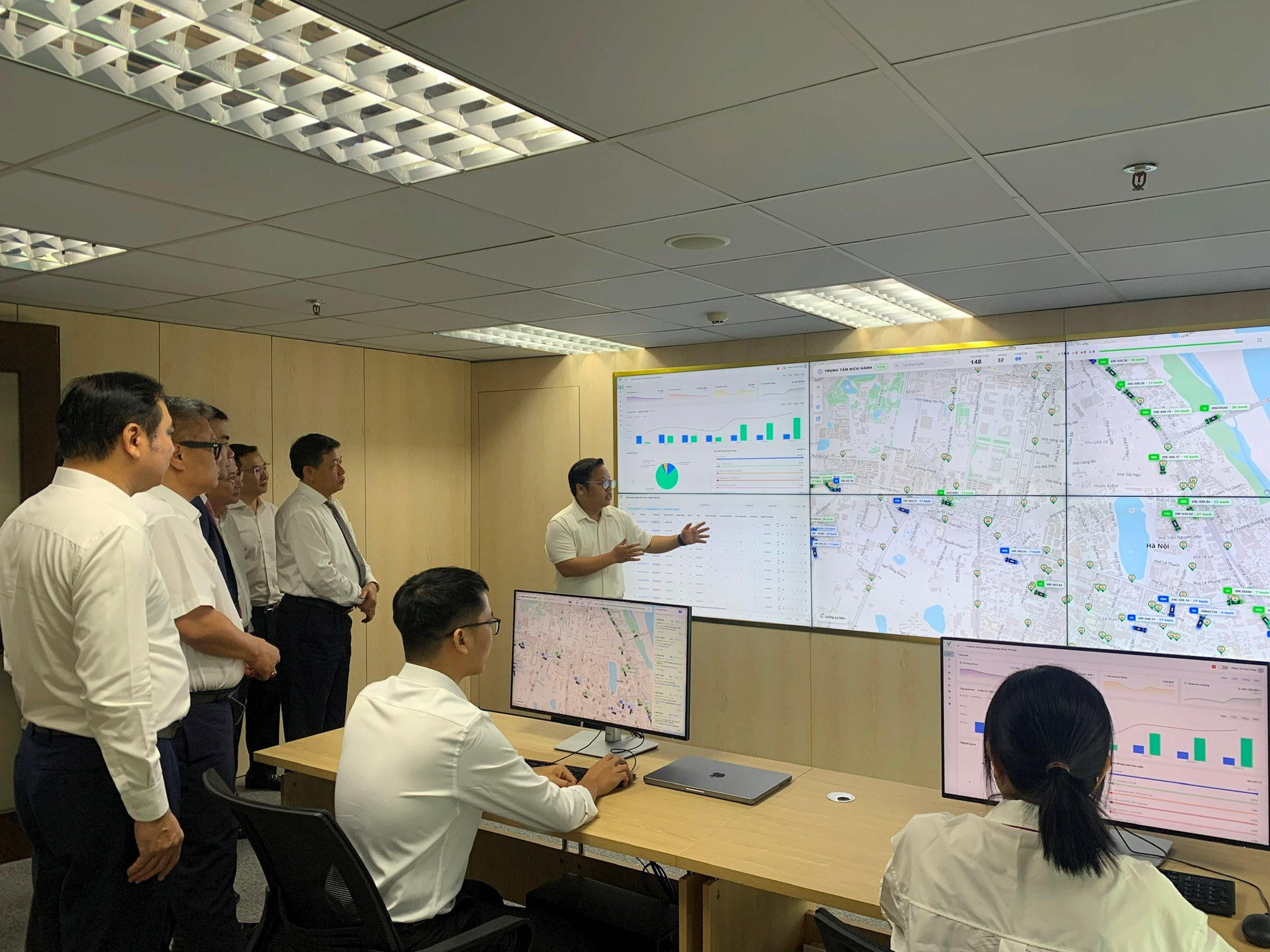
Digital infrastructure also enables the integration of information across planning and investment, transportation and travel demand, as well as manufacturing, logistics, and services. With data updated and shared in a synchronized manner, the city will have a stronger basis for forecasting infrastructure demand, organizing traffic, and identifying locations for the development of new urban and economic hubs.
If roads and railways open up space for the movement of people and goods, digital infrastructure helps manage and coordinate these flows more efficiently. But for infrastructure to truly become a driver of growth, the first prerequisite remains the timely completion of projects.
At a meeting on August 12, 2026, to review the progress of key transport projects, Vũ Đại Thắng, Central Committee Member, Deputy Secretary of the Hanoi Party Committee, and Chairman of the Hanoi People's Committee, called for further acceleration of project implementation, particularly for projects where land clearance has already been completed. The city must address both site clearance and technical infrastructure in a coordinated manner, avoiding situations in which residents have already handed over their land but contractors are still unable to begin construction because power lines and pipelines have yet to be relocated.
For areas that have not yet been developed, the Chairman of the Hanoi People's Committee called for route alignments to be determined from the planning stage, minimizing routes through residential areas, reducing land clearance costs, and facilitating subsequent implementation. At major interchanges, connection plans must also take into account the future needs of multiple modes of transportation.
These requirements demonstrate that Hanoi is placing infrastructure investment within a broader vision: not merely addressing today's travel needs, but preparing the groundwork for tomorrow's development spaces.
A road, a station, or an interchange cannot, by itself, create a growth hub. Its value can only be fully realized when the infrastructure forms part of an integrated network, linked to land-use planning, public transportation, manufacturing, services, and other essential infrastructure.
For Hanoi, therefore, investing in infrastructure ahead of development is not simply about building more roads or increasing transport capacity. It is about creating a connected foundation upon which new development spaces can emerge, economic activities can find greater room to grow, and new growth drivers can be unlocked across a larger Hanoi.